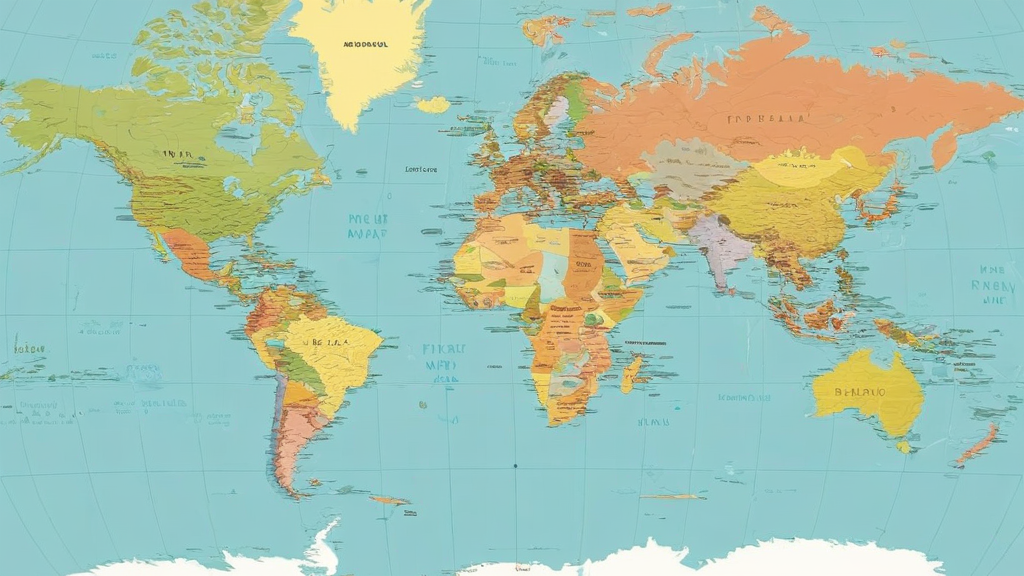
The world map serves as a crucial tool for understanding geography, history, and culture. This visual representation of our planet provides invaluable insights into the political borders, natural landscapes, and diverse ecosystems that define our world. Navigating through various regions becomes easier with a well-detailed world map, making it an essential resource for travelers, educators, and students alike.
In addition to practical navigation, the world map plays a significant role in education. It enhances learning by helping students visualize complex geographic concepts, including continents, oceans, and climate zones. Incorporating a world map into classrooms encourages interactive learning experiences, empowering students to explore global relations and cultural diversity.
The digital age has transformed how we interact with world maps. Online platforms now offer dynamic and interactive maps that allow users to zoom in and out, making geographical information more accessible than ever before. Features such as satellite imagery and real-time data about population density or climate conditions elevate the traditional world map into an engaging tool for exploration.
- Types of World Maps:
- Political Maps - Show countries, borders, and cities.
- Physical Maps - Highlight terrain, mountains, and rivers.
- Thematic Maps - Focus on specific data such as population or climate.
- Uses of World Maps:
- Travel Planning - Helping travelers discover new destinations.
- Education - Assisting in the teaching of geography.
- Research - Serving as a reference for scientists studying the Earth.
Understanding how to interpret a world map is a fundamental skill. From basic navigation to advanced geospatial analysis, the knowledge acquired through interacting with these maps enriches our comprehension of world dynamics. Whether through a school lesson or a casual journey, the world map continues to broaden our horizons.
{getProduct} $button={Get it Now} $price={In Stock} $free={yes} $icon={gift} $sale={20% Off}